

Why Voice Search Matters in Local SEO Marketing
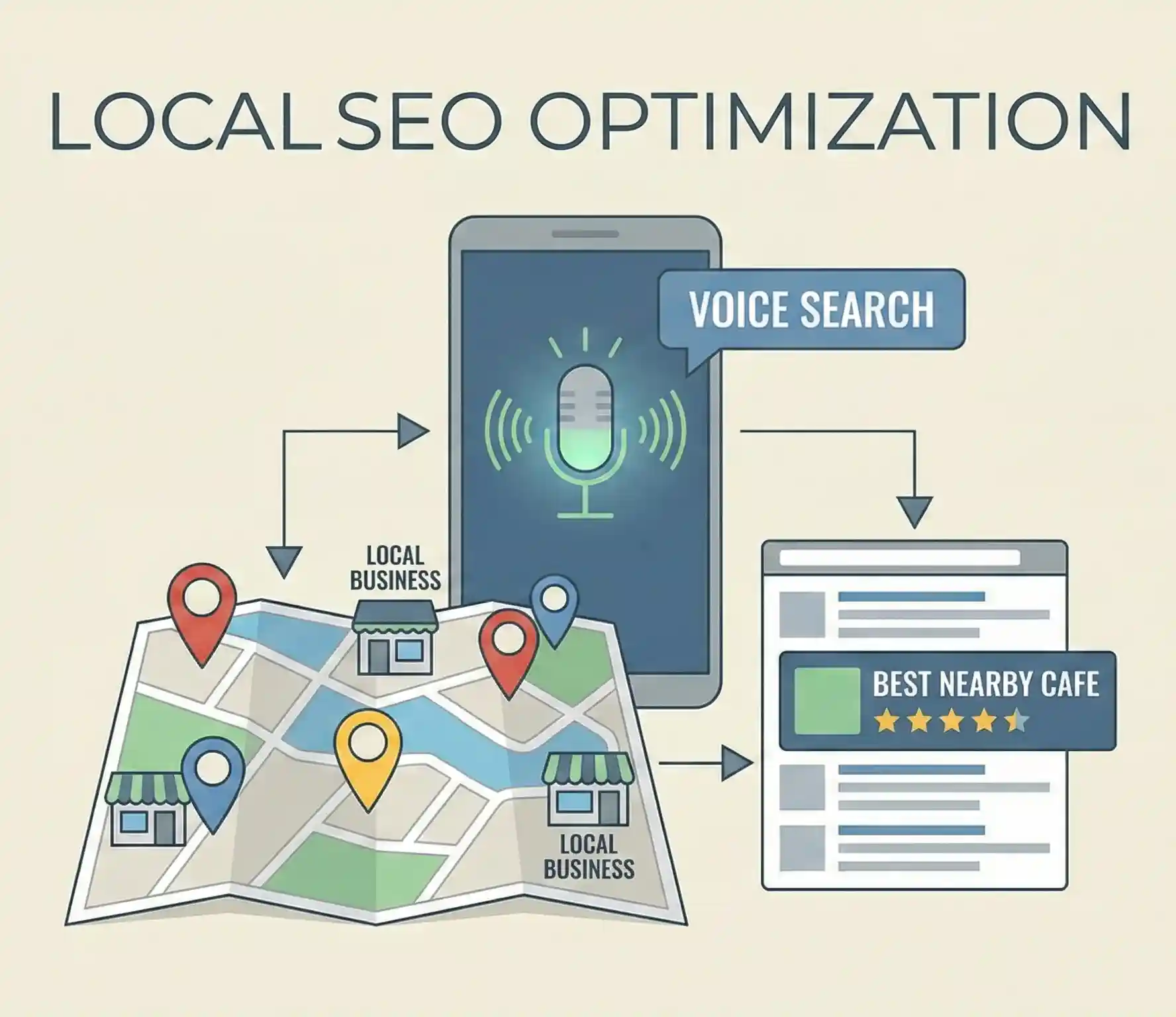
Voice search has changed how users interact with search engines. Instead of typing keywords, people now ask questions using natural language. As a result, voice search optimization for local SEO marketing has become essential for businesses targeting nearby customers.
Moreover, voice searches are often location-based. Phrases like “near me” or “open now” dominate these queries. Therefore, optimizing for voice search directly improves local visibility and customer engagement.
What Is Voice Search Optimization in Local SEO Marketing?
Voice search optimization focuses on improving content so it matches spoken search queries. In local SEO marketing, this means appearing in results when users ask for nearby services.
Unlike traditional searches, voice queries are longer and more conversational. Because of this, businesses must adapt their SEO strategies accordingly. When done correctly, voice optimization helps your brand appear in featured snippets and local packs.
How Voice Search Optimization Improves Local SEO Marketing
1. Targets High-Intent Local Searches
Voice users often search with clear intent. For example, “Where is the best digital marketing agency near me?” Optimizing for these queries attracts users who are ready to convert.
2. Boosts Google Business Profile Visibility
Accurate business information plays a key role in voice search optimization for local SEO marketing. Search assistants rely heavily on Google Business Profiles to deliver quick answers.
Make sure your business name, address, phone number, and hours are always updated. This consistency improves trust and rankings.
Learn more about optimizing local profiles from Google’s guide:
Google Business Profile Help – https://support.google.com/business
Best Practices for Voice Search Optimization for Local SEO Marketing
Use Conversational Keywords
Instead of short phrases, focus on question-based keywords. For example:
- “How does local SEO marketing help small businesses?”
- “Who offers SEO marketing services near me?”
This approach aligns perfectly with voice search behavior.
Optimize for Featured Snippets
Voice assistants often pull answers from featured snippets. Therefore, concise and clear answers increase your chances of being selected.
Additionally, using bullet points and short paragraphs improves readability.
Strengthen Local Content Pages
Create location-specific landing pages that highlight services and areas served. This tactic supports voice search optimization for local SEO marketing while improving local relevance.
You can also explore advanced SEO strategies here:
Moz – Voice Search SEO Guide – https://moz.com/learn/seo/voice-search
The Role of Mobile Optimization in Voice Search
Most voice searches happen on mobile devices. Consequently, a mobile-friendly website is essential. Fast loading speed, clean layout, and easy navigation all support better rankings.
At the same time, internal linking improves crawlability and user flow. For example, linking to your service pages helps search engines understand your expertise.
Explore proven SEO solutions at Creative Idea Labs:
https://creativeidealabs.com/
Why Local Businesses Should Act Now
Voice search usage continues to grow each year. Businesses that adapt early gain a competitive edge. Meanwhile, those who delay risk losing visibility to better-optimized competitors.
By investing in voice search optimization for local SEO marketing, brands improve discoverability, credibility, and conversions.
Voice Search Is the Future of Local SEO Marketing
Voice search is no longer optional. It is a critical part of modern local SEO marketing strategies. By focusing on conversational keywords, local intent, and mobile optimization, businesses can stay ahead in search rankings.
If you want your brand to be heard, not just seen, voice search optimization is the next step forward.


