

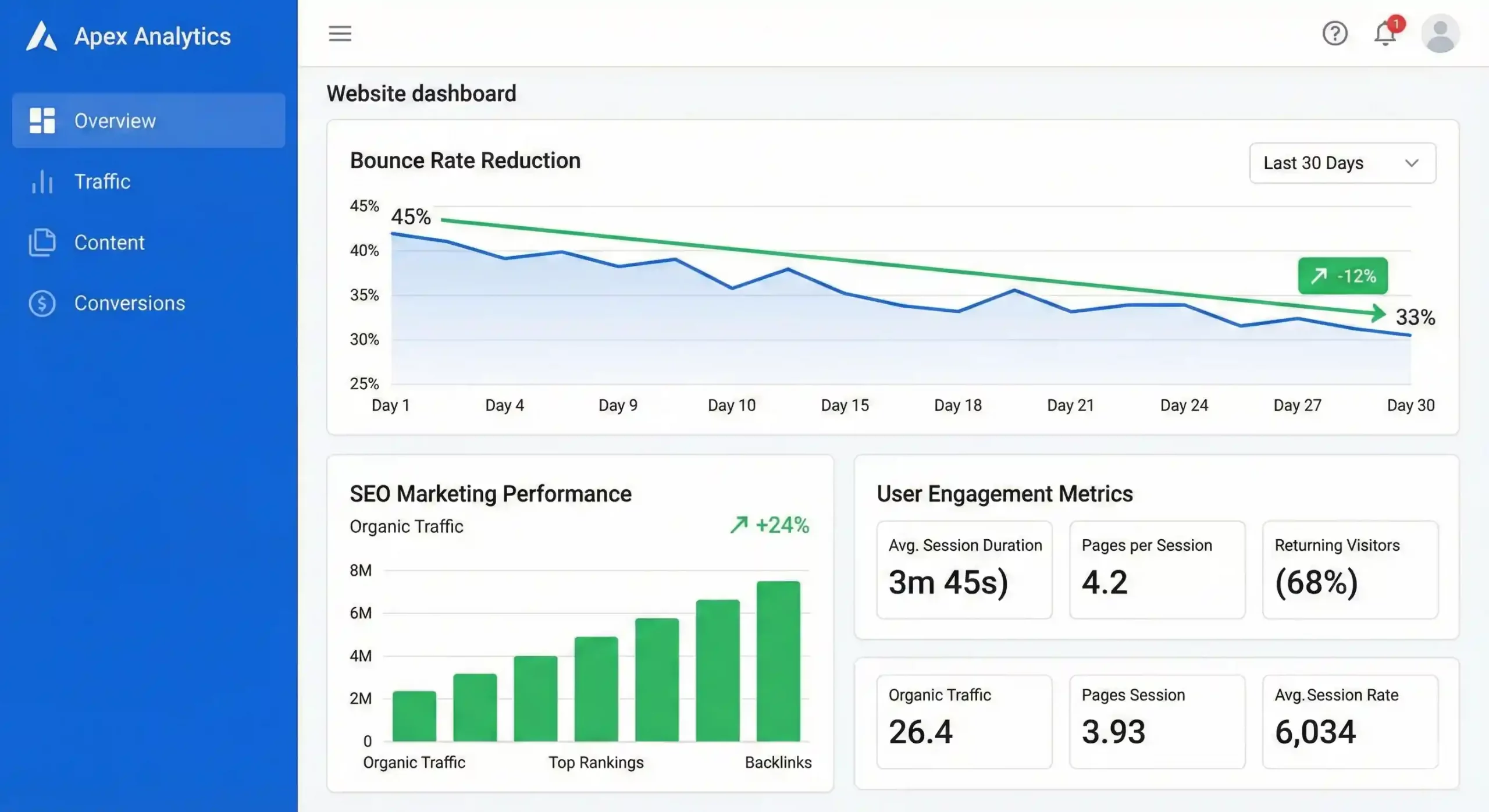
Reducing bounce rate plays a critical role in strengthening SEO Marketing performance. When visitors leave a website without interacting, search engines interpret this as a sign of poor relevance. As a result, rankings may suffer.
Fortunately, bounce rate can be optimized through smart design, high-quality content, and improved user experience. In this guide, you will learn practical strategies that help reduce bounce rate while supporting long-term SEO Marketing success.
What Is Bounce Rate in SEO Marketing?
Bounce rate measures the percentage of users who leave a website after viewing only one page. In SEO Marketing, a high bounce rate often signals that the page did not meet user expectations.
However, bounce rate should always be analyzed with context. Blog posts, for example, may naturally have higher bounce rates. Even so, reducing bounce rate remains essential for improving engagement and search visibility.
Why Reducing Bounce Rate Improves SEO Marketing Performance
Reducing bounce rate benefits SEO Marketing in several ways:
- Improves user engagement signals
- Increases average session duration
- Enhances content relevance
- Supports higher search engine rankings
Search engines prioritize websites that deliver value quickly. Therefore, keeping users engaged becomes a strategic SEO Marketing advantage.
Proven Strategies for Reducing Bounce Rate for SEO Marketing
Improve Page Load Speed
Slow websites drive users away. Page speed optimization is one of the most effective ways of reducing bounce rate for SEO Marketing.
Recommended actions include:
- Compressing images
- Using browser caching
- Minimizing CSS and JavaScript
Google confirms that faster pages lead to better user satisfaction and rankings.
Reference: PageSpeed Insights – https://pagespeed.web.dev/
Match Search Intent With Content
Users bounce when content does not match their expectations. Aligning keywords with intent ensures visitors find what they are searching for.
For SEO Marketing, content should:
- Answer questions clearly
- Deliver value immediately
- Stay focused on one primary topic
This alignment directly supports reducing bounce rate and improving rankings.
Optimize Mobile User Experience
Mobile users account for most web traffic today. A poor mobile experience increases bounce rate dramatically.
Mobile optimization includes:
- Responsive design
- Readable font sizes
- Easy navigation
Google emphasizes mobile-first indexing as a ranking factor.
Reference: Google Search Central – https://developers.google.com/search/mobile-sites
Use Clear Internal Linking
Internal linking encourages users to explore additional pages. This reduces bounce rate while strengthening SEO Marketing structure.
For example, linking to service pages or related blogs keeps visitors engaged longer.
You can explore SEO-focused strategies at Creative Idea Labs:
👉 https://creativeidealabs.com/
Improve Content Readability
Readable content keeps users scrolling. To support SEO Marketing goals:
- Use short paragraphs
- Add subheadings
- Include transition words
Clear structure ensures visitors stay longer and interact with your content.
How Content Quality Supports Reducing Bounce Rate
High-quality content builds trust. When users find value, they stay longer and explore more pages.
Effective SEO Marketing content should:
- Be informative and actionable
- Include visuals for clarity
- Provide real solutions
According to HubSpot, engaging content significantly lowers bounce rate.
Reference: HubSpot Marketing Blog – https://blog.hubspot.com/marketing
Measuring Bounce Rate for SEO Marketing Success
Tracking bounce rate helps identify weak pages. Tools such as Google Analytics provide valuable insights into user behavior.
Key metrics to monitor include:
- Bounce rate per page
- Average session duration
- Pages per session
Data-driven optimization ensures consistent SEO Marketing improvements.
Conclusion
Reducing bounce rate is not just about metrics—it is about delivering better user experiences. When visitors stay longer, SEO Marketing performance improves naturally.
By focusing on speed, relevance, mobile optimization, and content quality, businesses can lower bounce rates and achieve sustainable search growth.
For professional SEO Marketing solutions, Creative Idea Labs offers strategies designed to convert visitors into loyal users.


