

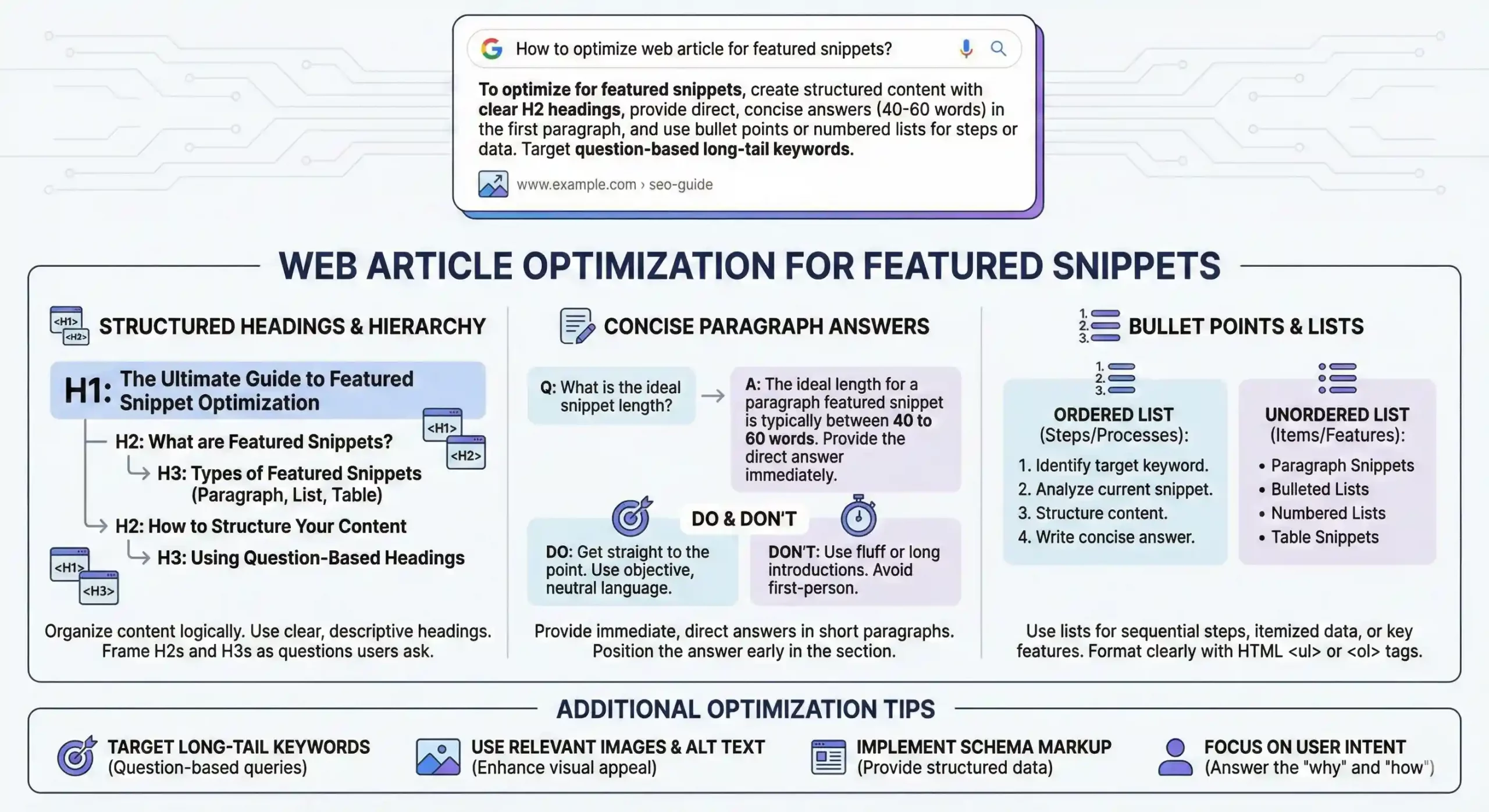
Featured snippets are one of the most powerful visibility tools in SEO Marketing today. They appear above traditional search results and often capture the majority of clicks. Therefore, optimizing existing content for featured snippets is no longer optional—it is essential.
In this guide, you’ll learn how to refine your current content so it becomes snippet-ready, while strengthening overall SEO performance.
Why Featured Snippets Matter in SEO Marketing
Featured snippets provide concise answers directly on the search results page. As a result, they position your brand as an authority while driving qualified traffic.
Moreover, featured snippets improve voice search visibility and increase trust signals. In SEO Marketing, these benefits translate into higher engagement and long-term growth.
Types of Featured Snippets You Should Target
Understanding snippet formats helps align content structure with search intent.
1. Paragraph Snippets
These answer direct questions in 40–60 words.
Tip: Add short, clear definitions near the top of your content.
2. List Snippets
Google often pulls bullet points or numbered steps.
Tip: Break processes into clearly labeled steps.
3. Table Snippets
These compare data or features.
Tip: Use clean tables with simple headers.
How to Optimize Existing Content for Featured Snippets
Identify Snippet Opportunities
Start by reviewing pages ranking between positions 2–10. These pages already have authority, which makes them strong candidates.
Tools such as Google Search Console or SEMrush can highlight queries that already trigger snippets. According to industry research by Ahrefs, most snippets come from top-ranking pages.
Source: https://ahrefs.com/blog/featured-snippets/
Match Search Intent Precisely
Content must align exactly with what users are asking. Therefore, review the query and rewrite sections to deliver a direct answer.
For example, use question-based subheadings like:
- What is optimizing existing content for featured snippets?
This structure helps search engines extract answers more easily.
Optimize Headings and Formatting
Proper formatting improves snippet eligibility.
- Use H2 or H3 headings with questions
- Place concise answers directly below headings
- Keep sentences short and scannable
This formatting approach is widely recommended in SEO Marketing best practices.
Source: https://developers.google.com/search/docs/appearance/featured-snippets
Improve Content Clarity and Freshness
Outdated content rarely earns featured snippets. Consequently, update statistics, refresh examples, and remove unnecessary fluff.
Additionally, ensure that internal links guide users deeper into your website. For instance, linking to Creative Idea Labs strengthens topical authority and improves crawlability:
👉 https://creativeidealabs.com/
On-Page SEO Enhancements That Help Snippets
- Add schema markup where appropriate
- Optimize page speed and mobile usability
- Use transition words to improve readability
- Avoid passive voice whenever possible
When combined, these enhancements reinforce your SEO Marketing strategy and boost snippet potential.
Common Mistakes to Avoid
- Overly long answers
- Missing question-based headings
- Keyword stuffing instead of natural phrasing
- Ignoring search intent
Avoiding these mistakes ensures your content remains both user-friendly and search-engine friendly.


