

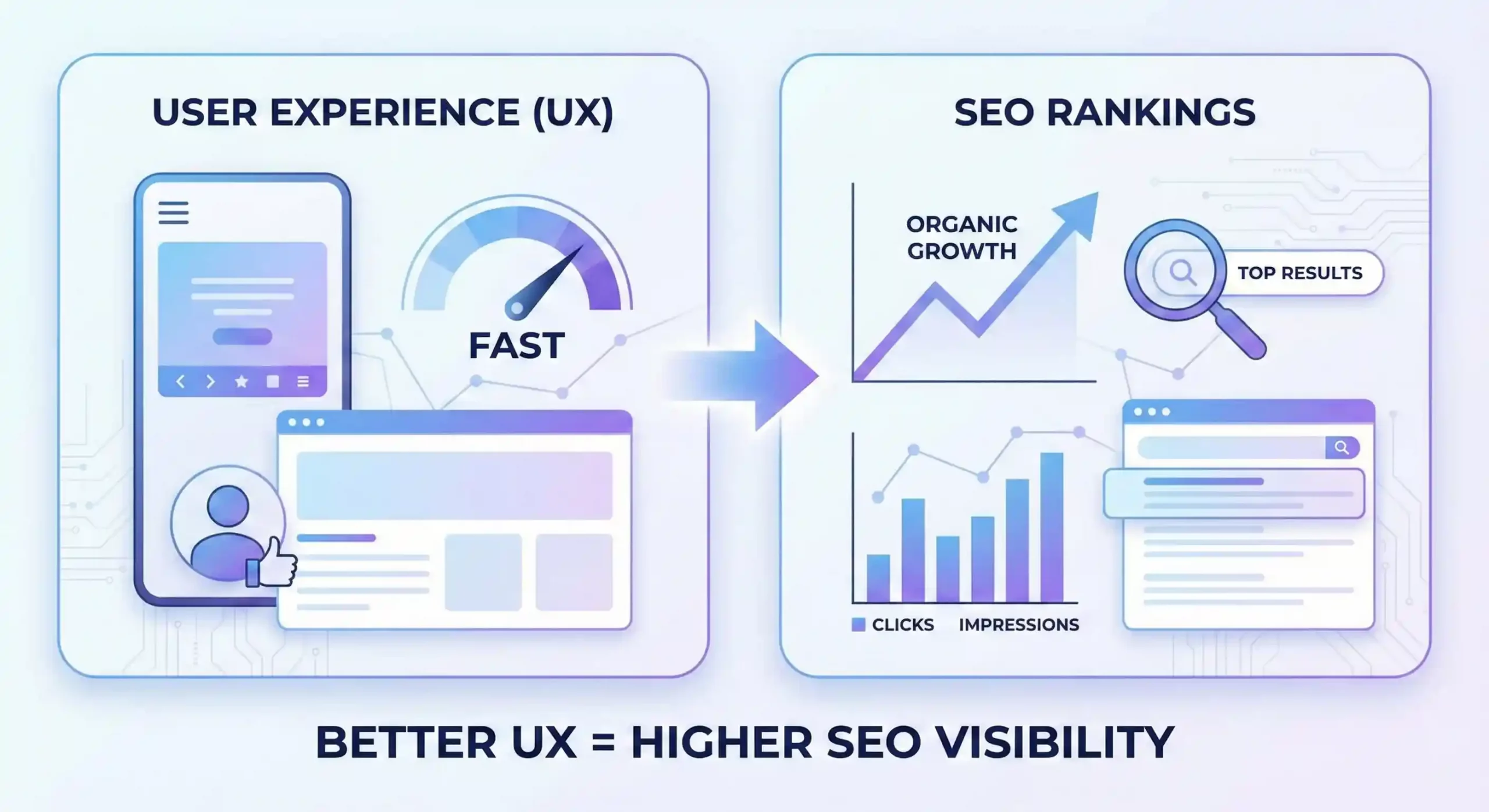
User experience has become one of the most powerful ranking signals in search engines today. As algorithms evolve, search engines increasingly prioritize websites that deliver value, clarity, and seamless usability. Understanding how User Experience (UX) impacts SEO rankings allows businesses to improve visibility, retain visitors, and convert more customers.
Good UX is no longer optional—it’s a core pillar of SEO Marketing.
Why User Experience Matters in SEO Marketing
Search engines aim to provide users with the best and most relevant results. If a website frustrates visitors, loads slowly, or feels confusing, users leave quickly. This feedback tells search engines that the page failed to meet expectations, resulting in lower rankings.
Improving UX helps reduce bounce rates, increase time-on-page, and enhance engagement—all essential indicators for search engines.
Key UX Elements That Directly Improve SEO Rankings
1. Page Speed and Core Web Vitals
Fast-loading pages dramatically affect how User Experience (UX) impacts SEO rankings. Google’s Core Web Vitals measure:
- Largest Contentful Paint (LCP)
- First Input Delay (FID)
- Cumulative Layout Shift (CLS)
A slow site leads to user drop-offs, reducing ranking potential.
Google Developers – Core Web Vitals https://developers.google.com/search/docs/appearance/core-web-vitals
2. Mobile-Friendly Design
More searches occur on mobile devices than desktops. Responsive design ensures that a site adapts smoothly to all screen sizes.
Search engines prioritize mobile-first indexing, meaning mobile UX heavily shapes SEO rankings.
3. Intuitive Navigation and Site Structure
Clear menus, breadcrumbs, and logical page hierarchy help users find information faster. This allows search engines to crawl and index your pages more efficiently.
A structured site boosts visibility and enhances SEO Marketing strategy.
4. Quality Content That Matches User Intent
Content must answer search intent precisely. Visitors stay longer and explore more when content is easy to read, visually structured, and engaging.
Improved dwell time contributes to how User Experience (UX) impacts SEO rankings.
Learn more about improving digital experience at https://creativeidealabs.com/
5. Visual Stability and Clean Layouts
Cluttered designs push users away, while consistent spacing, fonts, and formatting encourage them to continue browsing.
Clean layouts support UX and strengthen your SEO signals.
How UX Enhances SEO Marketing Performance
When UX and SEO Marketing work together, websites experience:
- Higher organic traffic
- Enhanced brand credibility
- Lower bounce rates
- Stronger customer trust
- Better conversion rates
Search engines reward websites that satisfy users. The stronger your UX, the more stable your search rankings.
Practical Ways to Improve UX for Better SEO Rankings
Optimize Load Speed
Compress images, use caching, and minimize code.
Design for Mobile First
Ensure clickable elements are spaced correctly and content fits all screens.
Create Skimmable Content
Use bullet points, short paragraphs, and clear subheadings.
Enhance On-Page Engagement
Use visuals, internal links, and CTAs to keep users interacting.
Use Clear Navigation
Improve menus and breadcrumb trails to help users understand where they are.
Supporting Links
- “Google’s Page Experience Update Explained” – Search Engine Journal
https://www.searchenginejournal.com/google-page-experience-guide - “How UX Impacts SEO: A Complete Overview” – Moz
https://moz.com/blog/ux-and-seo


