

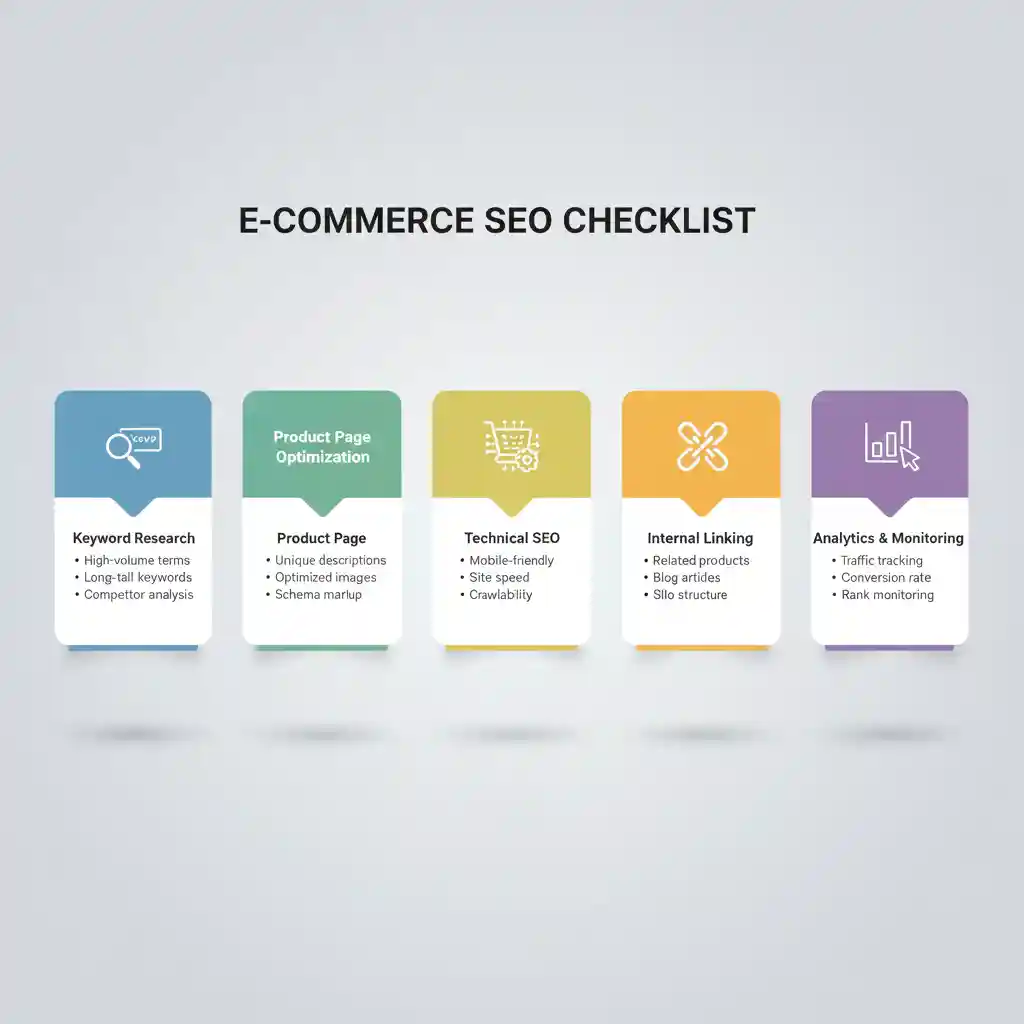
Why SEO Marketing Matters for E-commerce Stores
SEO Marketing allows online stores to attract high-intent shoppers organically. Instead of relying only on paid ads, optimized e-commerce websites build long-term visibility. Moreover, search engines reward stores that deliver fast, relevant, and user-friendly experiences.
As a result, following a structured E-commerce SEO Checklist ensures consistency and measurable growth.
E-commerce SEO Checklist for Online Stores
1. Keyword Research for Buyer Intent
Effective SEO Marketing starts with understanding search intent. Product-focused keywords convert better than generic terms.
Checklist actions:
- Target long-tail product keywords
- Analyze competitors’ ranking terms
- Map keywords to categories and product pages
Helpful resource:
Keyword Research Guide by Moz – https://moz.com/beginners-guide-to-seo/keyword-research
2. Optimize Product Pages for SEO Marketing
Product pages generate most e-commerce revenue. Therefore, each page must follow SEO best practices.
Checklist actions:
- Use focus key phrase in title and H1
- Write unique product descriptions
- Add schema markup for products
- Optimize images with ALT text
According to Shopify SEO Best Practices, optimized product pages improve both rankings and conversions:
https://www.shopify.com/blog/ecommerce-seo
3. Improve Site Architecture and Internal Linking
Search engines favor clear navigation. Logical site structure also improves user experience.
Checklist actions:
- Use breadcrumb navigation
- Limit clicks to reach product pages
- Add internal links between categories and blogs
Learn more about strategic SEO planning at Creative Idea Labs → https://creativeidealabs.com/
4. Technical SEO for Online Stores
Technical SEO supports all SEO Marketing efforts. Without it, even great content struggles to rank.
Checklist actions:
- Improve page speed
- Ensure mobile responsiveness
- Fix broken links and crawl errors
- Submit XML sitemap to Google Search Console
Google’s official guidance:
Search Essentials (SEO) – https://developers.google.com/search/docs/essentials
5. Content Marketing for E-commerce SEO
Blogs support category and product rankings. In addition, content builds topical authority.
Checklist actions:
- Publish buying guides
- Answer customer FAQs
- Create comparison articles
You can explore how blogs improve SEO performance here:
https://creativeidealabs.com/
6. Optimize for User Experience (UX)
SEO Marketing is no longer just about keywords. User behavior signals influence rankings.
Checklist actions:
- Reduce bounce rate
- Improve checkout flow
- Use clear CTAs
- Add product reviews
When users stay longer, rankings often improve naturally.
7. Monitor Performance and Update Regularly
SEO Marketing requires ongoing optimization. Algorithms change, and competitors evolve.
Checklist actions:
- Track rankings and conversions
- Update old product content
- Refresh metadata regularly
Recommended tool:
Ahrefs SEO Monitoring – https://ahrefs.com/


