

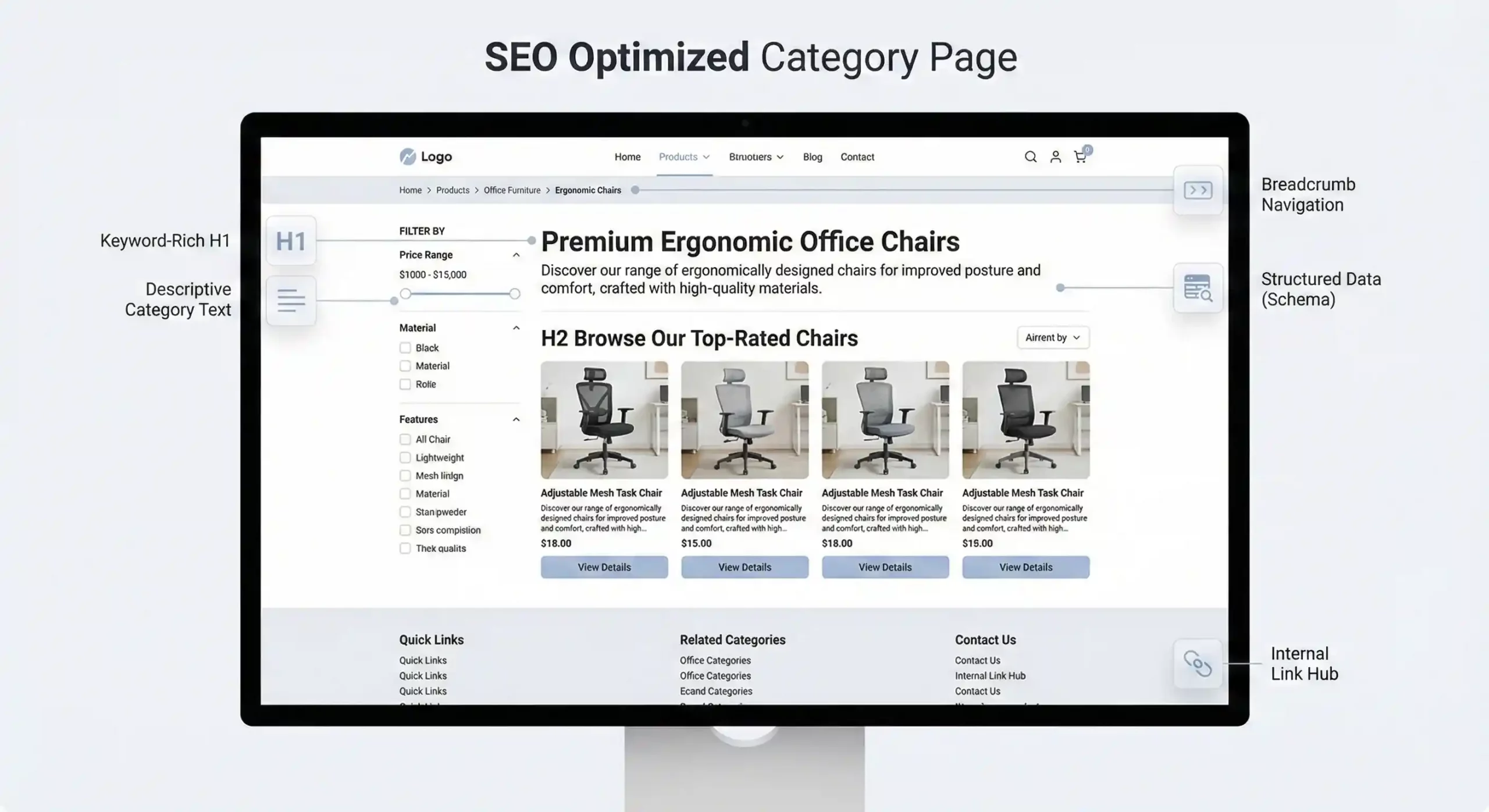
Category pages are often the strongest traffic drivers for eCommerce and service-based websites. When optimized correctly, Category Page SEO Marketing helps search engines understand your site structure while guiding users smoothly toward conversions. This guide breaks down proven best practices to help category pages rank higher and perform better.
Why Category Page SEO Marketing Matters
Category pages target high-intent keywords. As a result, they attract users who are closer to making a decision. When Category Page SEO Marketing is implemented correctly, it strengthens topical authority and improves crawl efficiency. Additionally, search engines such as Google rely on clear page structure to rank pages accurately.
Best Practices for Category Page SEO Marketing
1. Optimize Category Page Content
Every category page should include unique, helpful content. Instead of relying only on product listings, add a short introduction that explains what users will find.
Best tips:
- Add 100–300 words of descriptive content
- Include the focus key phrase naturally
- Avoid keyword stuffing
This approach improves relevance while keeping the page user-friendly.
2. Use SEO-Friendly URLs
Clean URLs help both users and search engines. Therefore, category URLs should be short, readable, and keyword-focused.
Example:/seo-services/category-page-seo-marketing
3. Improve Internal Linking Structure
Internal links pass authority and guide crawlers. Category pages should link to subcategories, featured products, and related blog posts.
For example, link relevant service pages and resources from Category Page SEO Marketing guides on your site. Creative Idea Labs
4. Optimize Headings and Subheadings
Use H1 for the main category title. Then, structure subtopics using H2 and H3 headings.
SEO advantage:
- Improves readability
- Helps search engines understand content hierarchy
- Reinforces focus key phrase placement
5. Enhance User Experience (UX)
User behavior impacts rankings. Therefore, pages should load quickly and be easy to navigate.
UX elements to optimize:
- Mobile responsiveness
- Clear filters and sorting options
- Fast page speed
- Simple navigation
A positive UX reduces bounce rate and increases dwell time.
6. Add Structured Data Where Possible
Schema markup helps search engines understand page context. Product schema and breadcrumb schema are especially useful for category pages.
7. Avoid Thin or Duplicate Content
Thin category pages struggle to rank. Instead of using the same description across multiple pages, customize content for each category. This strategy strengthens Category Page SEO Marketing and prevents cannibalization.
Common Mistakes to Avoid
- Using only product grids with no text
- Overloading pages with filters that create duplicate URLs
- Ignoring internal links
- Keyword stuffing headings
Fixing these issues can significantly improve organic visibility.


