
What Are SERP Layouts in SEO Marketing?
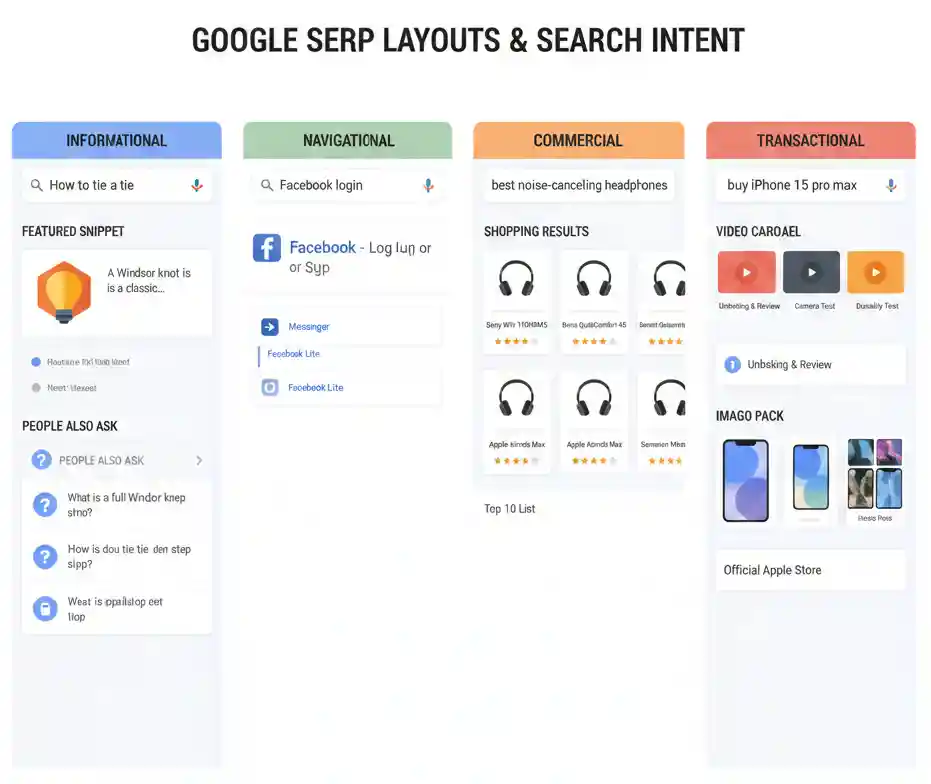
SERP layouts refer to how results are visually arranged on a search engine results page. Today, Google displays a wide range of result types depending on the query.
Common SERP elements include:
- Featured snippets
- People Also Ask boxes
- Local packs
- Image carousels
- Video results
- Shopping listings
Each layout signals what Google believes best satisfies the user’s intent. Therefore, SEO Marketing strategies must adapt to these layouts rather than focusing only on traditional rankings.
Types of Search Intent Explained
Search intent defines why a user performs a search. In SEO Marketing, intent is typically grouped into four categories.
Informational Intent
Users want answers or explanations.
Examples include guides, definitions, and tutorials.
Typical SERP features:
- Featured snippets
- People Also Ask
- Knowledge panels
Navigational Intent
Users aim to reach a specific site or brand.
Typical SERP features:
- Sitelinks
- Brand panels
Commercial Investigation Intent
Users compare options before making a decision.
Typical SERP features:
- Reviews
- Comparison articles
- Top stories
Transactional Intent
Users are ready to take action, such as buying or booking.
Typical SERP features:
- Shopping ads
- Product listings
- Local packs
Aligning content with these intent types is a core principle of effective SEO Marketing.
How SERP Layouts Reveal Search Intent
SERP layouts act as intent clues. For example:
- A results page filled with videos suggests users prefer visual explanations.
- Shopping-heavy SERPs indicate strong transactional intent.
- Featured snippets point to quick-answer informational needs.
By analyzing SERP layouts before creating content, SEO Marketing professionals can match format, depth, and structure to user expectations.
Optimizing Content for SERP Layouts and Search Intent
To improve results, SEO Marketing strategies should follow these best practices:
- Analyze the live SERP before writing content.
- Match content format to dominant SERP features.
- Use structured headings to qualify for featured snippets.
- Add visual assets to compete in image and video results.
- Optimize internal links to strengthen topical authority.
For example, linking relevant resources from Creative Idea Labs helps reinforce site structure and SEO relevance. https://creativeidealabs.com/
External Resources Supporting This Topic
To deepen understanding of SEO Marketing SERP behavior, explore these trusted sources:
- Google Search Central – Search Intent Explained
https://developers.google.com/search/docs/fundamentals/creating-helpful-content - Moz – Beginner’s Guide to SERPs
https://moz.com/learn/seo/serp-features - Ahrefs – Search Intent in SEO
https://ahrefs.com/blog/search-intent/
These references support best practices discussed throughout this post.
Why SERP and Intent Alignment Matters in SEO Marketing
When content aligns with both SERP layouts and search intent, several benefits follow:
- Higher click-through rates
- Improved dwell time
- Lower bounce rates
- Better conversion performance
As a result, search engines reward pages that deliver relevance and clarity. This alignment is no longer optional in competitive SEO Marketing environments.


