

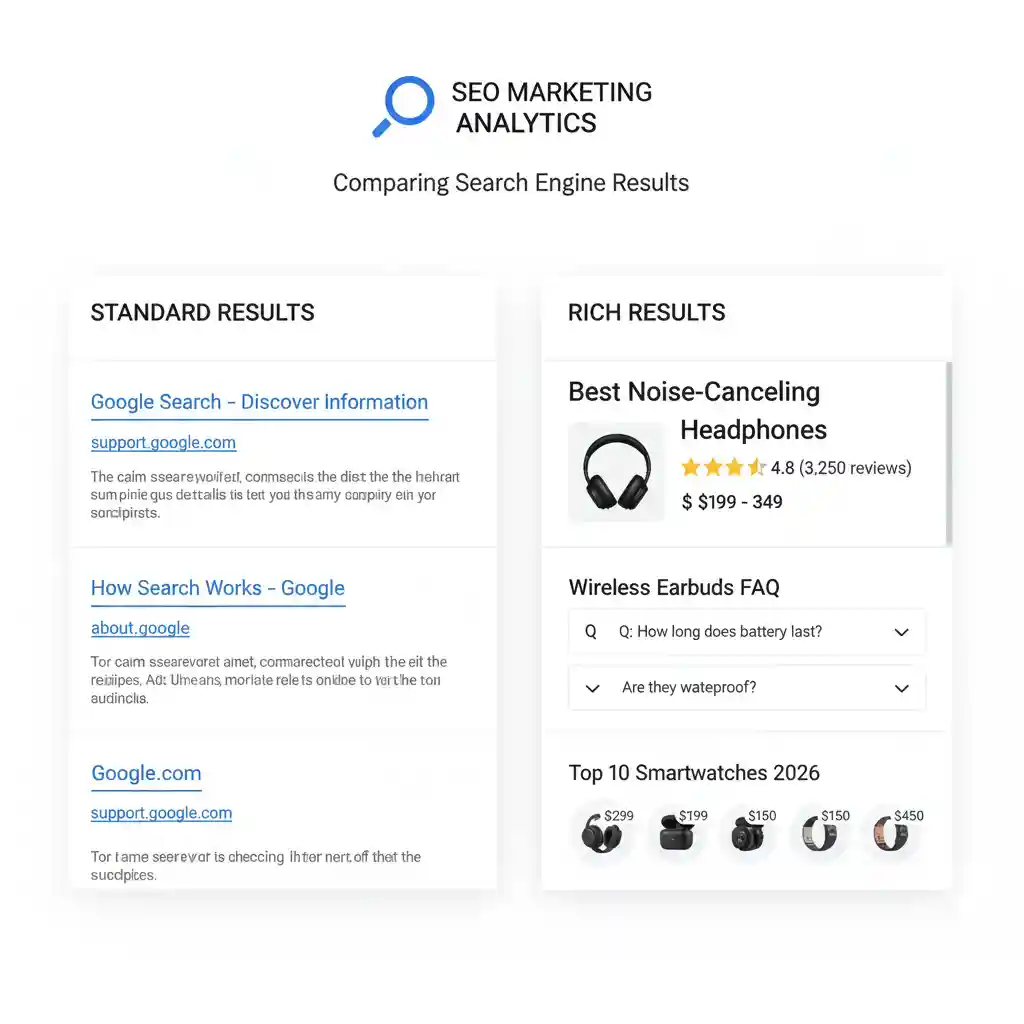
Rich Results are transforming how brands compete for visibility in search engines. In SEO marketing, they offer enhanced listings that attract attention, improve click-through rates, and establish credibility. However, qualifying for Rich Results requires more than great content—it demands technical precision and structured data implementation.
This guide explains what Rich Results are, why they matter, and exactly how to qualify for them using proven SEO marketing practices.
What Are Rich Results in SEO Marketing?
Rich Results are enhanced search listings that display additional visual or interactive elements. Unlike standard blue links, they may include ratings, images, FAQs, pricing, or event details.
In SEO marketing, Rich Results help search engines understand content better. As a result, users receive clearer and more engaging answers directly in search results.
Why Rich Results Matter for SEO Marketing
Rich Results directly influence organic performance. They improve visibility while building trust before a user even clicks.
Key benefits include:
- Higher click-through rates
- Improved brand authority
- Better user experience
- Increased SERP real estate
Therefore, implementing Rich Results is no longer optional—it is a competitive necessity in modern SEO marketing.
Types of Rich Results You Can Qualify For
Several Rich Result formats are available depending on your content type. Common examples include:
- FAQ Rich Results
- Product Rich Results
- Review and Rating snippets
- How-To Rich Results
- Article enhancements
Each format requires specific structured data markup to qualify.
How to Qualify for Rich Results
1. Implement Structured Data Correctly
Structured data helps search engines interpret your content. Schema markup must match the content exactly. Otherwise, eligibility may be lost.
Google recommends using JSON-LD format for best results. Learn more from the official documentation:
Google Search Central – Structured Data
https://developers.google.com/search/docs/appearance/structured-data
2. Follow Content Eligibility Guidelines
Content must be helpful, accurate, and accessible. Additionally, misleading markup can disqualify pages entirely.
Ensure that:
- Marked-up content is visible to users
- Information is not exaggerated
- Pages meet quality standards
3. Use the Right Schema Types
Choosing the correct schema type is essential in SEO marketing. For example, FAQ schema should only be used when questions and answers are clearly presented.
Helpful reference:
Schema.org Documentation
https://schema.org/docs/full.html
4. Test and Validate Your Markup
Validation is a critical step. After implementation, test your pages to confirm eligibility.
Recommended tools:
- Google Rich Results Test
https://search.google.com/test/rich-results - Google Search Console Enhancements Report
5. Maintain Technical SEO Health
Rich Results rely on strong technical foundations. Pages must load quickly, be mobile-friendly, and remain indexable.
For long-term success, pair Rich Results with ongoing SEO marketing optimization. Internal linking also supports crawlability and relevance. Explore more strategies at
https://creativeidealabs.com/
Common Reasons Pages Don’t Qualify
Even with schema in place, Rich Results are not guaranteed. Common issues include:
- Incorrect schema properties
- Spammy or duplicate content
- Manual actions or policy violations
- Poor page experience
Therefore, continuous monitoring is required to maintain eligibility.
Best Practices for Sustainable Rich Results
To future-proof your SEO marketing efforts:
- Keep structured data updated
- Monitor Search Console regularly
- Avoid over-marking content
- Align schema with user intent
When combined with quality content, Rich Results can significantly amplify organic performance.


