

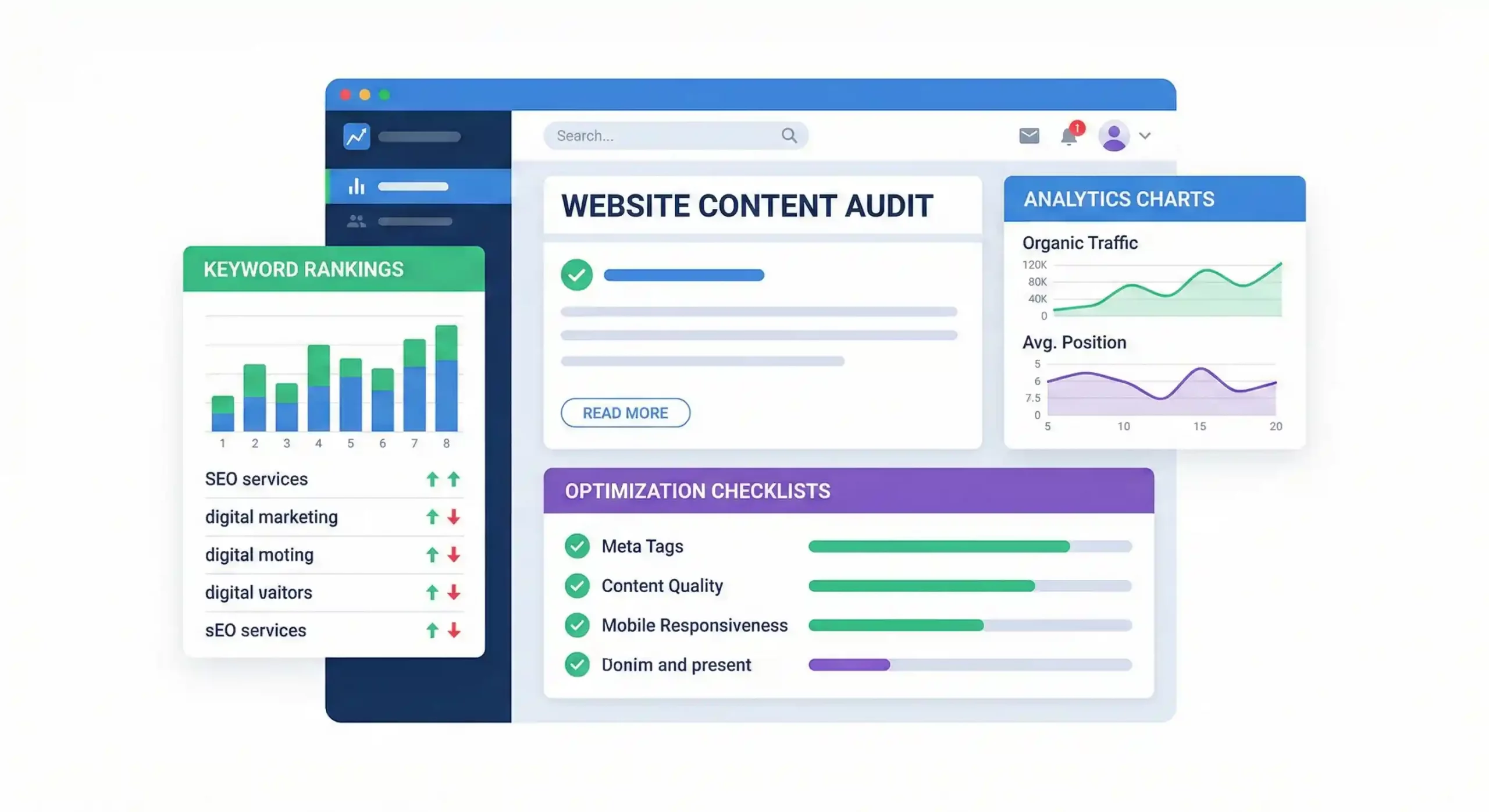
Search engines reward relevance, clarity, and value. However, even strong content can lose visibility over time. That is why SEO Marketing strategies must include regular SEO content audits. This step-by-step guide explains how to audit your content effectively and turn underperforming pages into traffic-driving assets.
What Are SEO Content Audits in SEO Marketing?
SEO content audits evaluate how well your pages align with search intent, technical SEO, and keyword performance. In SEO Marketing, audits reveal gaps, outdated pages, and missed optimization opportunities.
More importantly, they help you decide whether to update, merge, redirect, or remove content. As a result, your site becomes more authoritative and easier for search engines to crawl.
Why SEO Content Audits Matter for Rankings
SEO algorithms change constantly. Therefore, content that once ranked may decline over time. SEO content audits ensure your pages stay competitive by improving relevance and user experience.
Additionally, audits help:
- Increase organic traffic
- Improve keyword targeting
- Reduce crawl waste
- Strengthen internal linking
According to Google Search Central, maintaining high-quality content is essential for long-term performance:
Search Quality Guidelines – https://developers.google.com/search/docs
Step-by-Step SEO Content Audit Process
1. Inventory All Existing Content
Begin by listing every indexable page. Use tools like Google Search Console, Screaming Frog, or Ahrefs to export URLs.
This step gives visibility into what search engines already see.
2. Analyze Performance Metrics
Next, evaluate each page using:
- Organic traffic
- Click-through rate (CTR)
- Keyword rankings
- Bounce rate
In SEO Marketing, data drives decisions. Pages with declining traffic often need optimization rather than deletion.
3. Identify Content Gaps and Overlaps
Check whether multiple pages target the same keyword. Keyword cannibalization weakens rankings.
At the same time, look for missing keyword opportunities. These gaps often represent quick SEO wins.
4. Optimize On-Page SEO Elements
Now refine:
- Page titles
- Meta descriptions
- Header structure
- Keyword placement
Make sure SEO content audits improve clarity rather than over-optimization. Natural keyword use always performs better.
For advanced on-page best practices, see:
Moz On-Page SEO Guide – https://moz.com/learn/seo/on-page-factors
5. Improve Internal Linking Structure
Internal links guide both users and search engines. Therefore, connect related pages using descriptive anchor text.
For example, linking to core service pages strengthens authority.
Learn more about SEO services here: https://creativeidealabs.com/
6. Refresh, Merge, or Remove Content
Finally, take action:
- Refresh outdated content
- Merge overlapping pages
- Redirect thin or irrelevant URLs
This step is critical for maintaining a clean and effective SEO Marketing strategy.
Best Practices for Ongoing SEO Content Audits
To stay competitive, schedule audits every 6–12 months. Additionally, track algorithm updates and content performance trends.
SEO content audits are not one-time tasks. Instead, they are ongoing improvements that compound results over time.


