

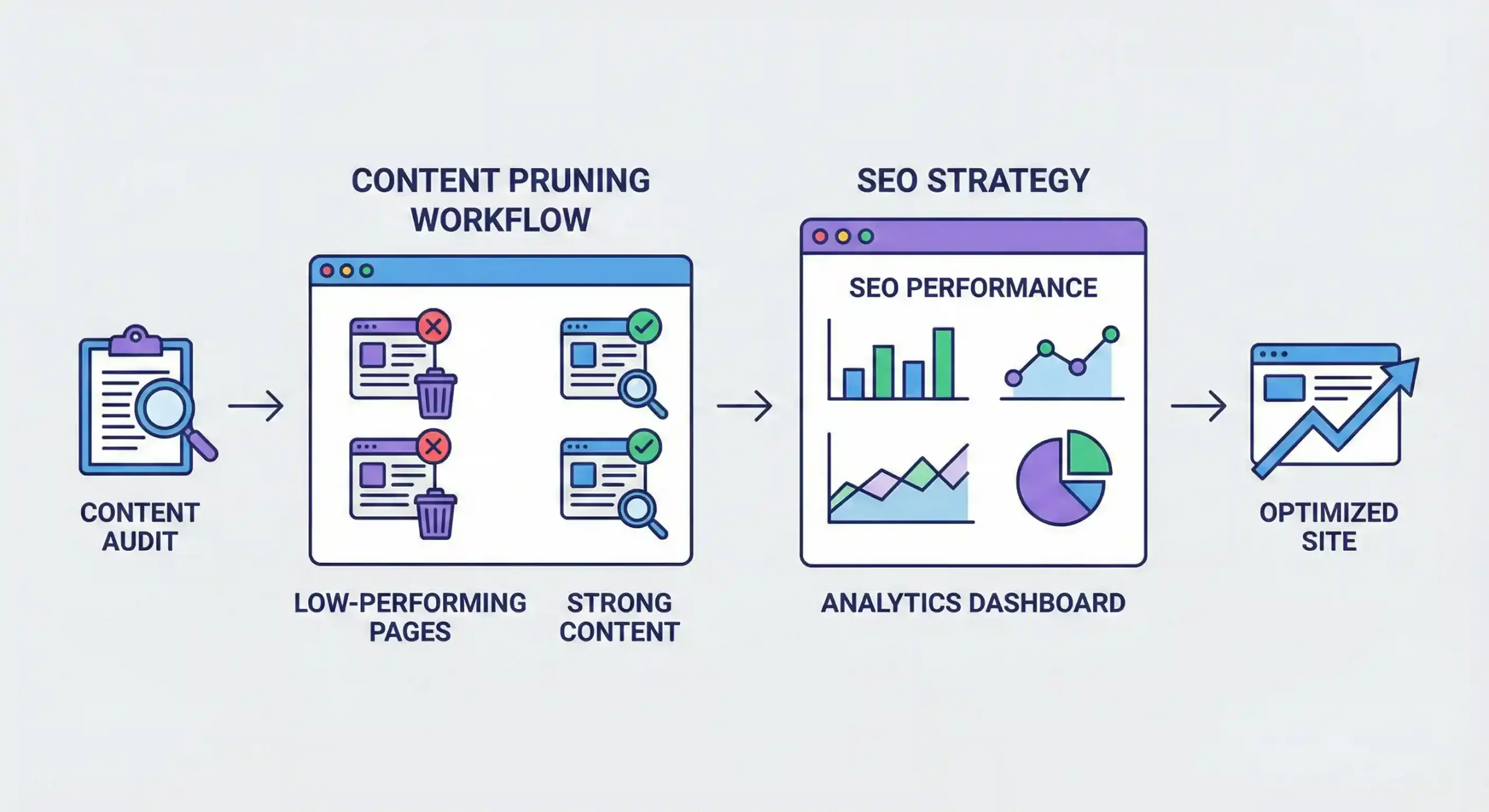
Content pruning is a powerful SEO Marketing strategy that helps websites improve rankings by removing or consolidating low-value pages. When executed correctly, it strengthens topical authority, enhances crawl efficiency, and improves user experience.
This guide explains when content pruning is necessary and how to do it safely without harming organic performance.
What Is Content Pruning in SEO Marketing?
Content pruning SEO Marketing is the process of identifying outdated, thin, or underperforming pages and either removing, merging, or updating them. Instead of adding more content endlessly, pruning improves the overall quality of your site.
As a result, search engines focus on your strongest pages, while users enjoy more relevant and accurate information.
⏰ When Should You Prune Content?
Content pruning should be performed strategically. Here are key situations where pruning is recommended:
1. Declining Organic Traffic
If pages show consistent traffic loss over several months, they may no longer meet search intent.
2. Thin or Low-Quality Content
Pages with minimal value, outdated information, or weak engagement metrics dilute SEO authority.
3. Keyword Cannibalization
Multiple pages competing for the same keywords can weaken rankings across all of them.
4. Crawl Budget Waste
Search engines spend limited resources crawling your site. Removing unnecessary pages improves crawl efficiency.
According to insights from Search Central by Google, quality-focused content signals are prioritized over quantity.
👉 https://developers.google.com/search/docs/fundamentals/creating-helpful-content
🛠️ How to Perform Content Pruning the Right Way
Step 1: Conduct a Content Audit
Use tools like Google Analytics and Google Search Console to identify pages with:
- Low impressions and clicks
- High bounce rates
- No backlinks or conversions
You can also partner with experts at Creative Idea Labs to perform a professional audit.
👉 https://creativeidealabs.com/
Step 2: Categorize Pages for Action
Group each page into one of these categories:
- Keep & Optimize – High-performing or high-potential pages
- Merge – Similar content targeting overlapping keywords
- Remove – Irrelevant, outdated, or zero-value pages
This structured approach ensures content pruning SEO Marketing remains safe and effective.
Step 3: Apply the Correct SEO Action
| Page Type | Recommended Action |
|---|---|
| Duplicate or overlapping | Merge + 301 redirect |
| Outdated but useful | Update and republish |
| No traffic or value | Remove + 410 or noindex |
Always redirect removed URLs properly to preserve link equity.
Step 4: Monitor Results
After pruning, track:
- Crawl stats
- Ranking improvements
- Organic traffic growth
SEO Marketing results often appear within 4–8 weeks when pruning is done correctly.
🚀 Benefits of Content Pruning SEO Marketing
- Improved topical authority
- Better keyword rankings
- Higher engagement rates
- Faster crawling and indexing
Industry studies from Ahrefs confirm that content consolidation and pruning often lead to measurable ranking gains.
👉 https://ahrefs.com/blog/content-audit/


