

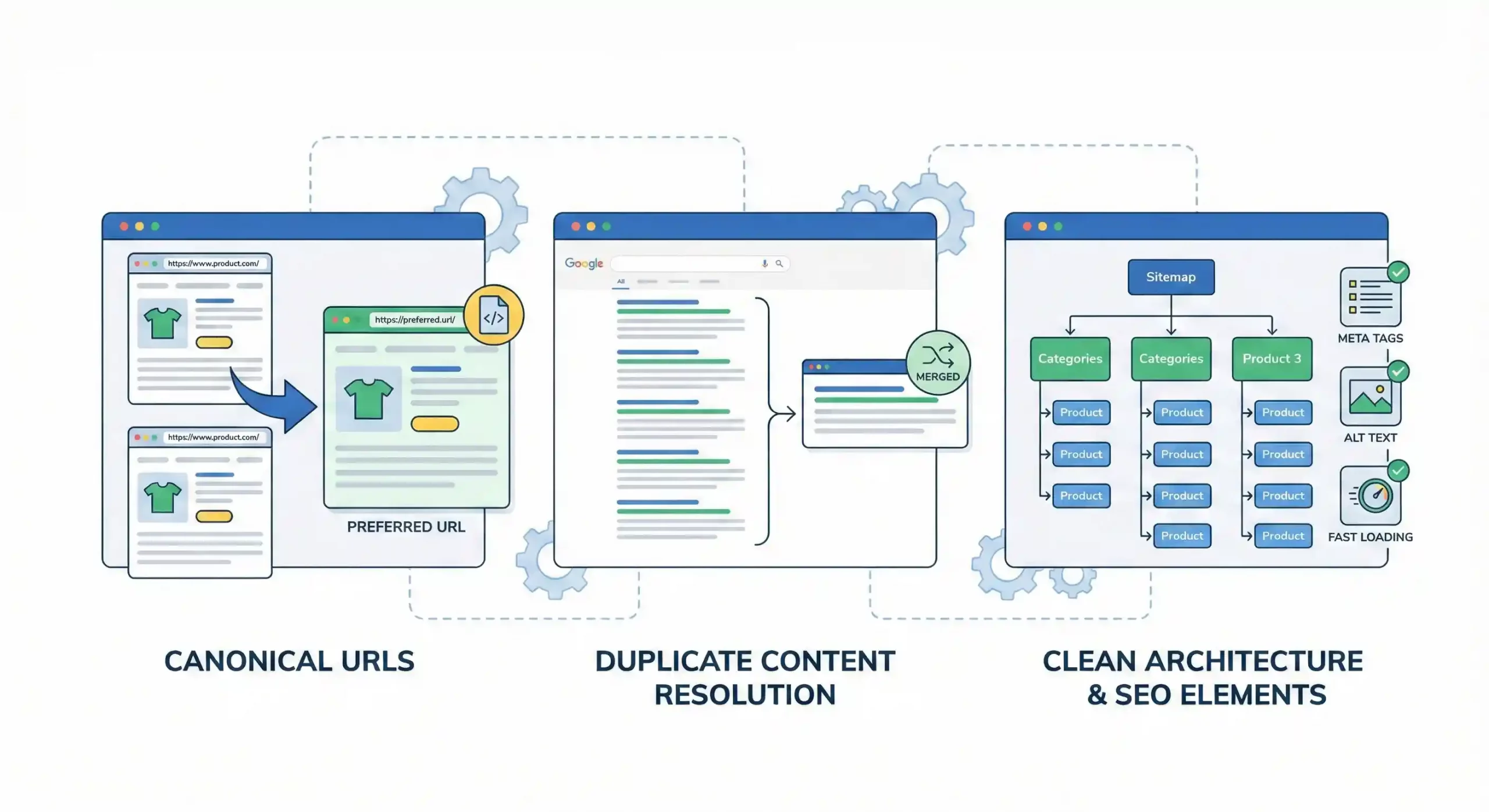
Duplicate content is one of the most common challenges online stores face. When left unmanaged, it can dilute rankings, waste crawl budget, and reduce overall visibility. In SEO Marketing, handling duplicate content correctly is essential for sustainable growth in competitive e-commerce environments.
This guide explains why duplicate content happens, how it affects SEO Marketing, and the best practices to resolve it effectively.
What Is Duplicate Content in E-commerce SEO Marketing?
Duplicate content refers to identical or very similar content appearing on multiple URLs. In e-commerce SEO Marketing, this often happens unintentionally. While duplicate content does not usually result in penalties, it can confuse search engines and reduce ranking potential.
Common causes include:
- Product variations (size, color, material)
- URL parameters and filters
- Pagination and sorting options
- Multiple category paths to the same product
- Session IDs and tracking parameters
Why Duplicate Content Hurts SEO Marketing
Handling duplicate content in e-commerce SEO Marketing is critical because search engines may:
- Struggle to choose the correct page to rank
- Split link equity between similar URLs
- Waste crawl budget on redundant pages
As a result, your most valuable product or category pages may underperform.
Best Practices for Handling Duplicate Content in E-commerce SEO Marketing
1. Use Canonical URLs Correctly
Canonical tags tell search engines which version of a page is the primary one. This approach is essential for SEO Marketing when multiple URLs show similar products.
Best practice:
Set the canonical URL to the main product or category page.
Learn more:
Canonical URLs Explained – https://developers.google.com/search/docs/crawling-indexing/canonicalization
2. Optimize Product Variations
Instead of creating separate pages for each variation, consolidate them into one primary product page whenever possible. This strategy strengthens SEO Marketing signals and improves user experience.
If separate URLs are required, ensure each variation has:
- Unique product descriptions
- Distinct titles and meta descriptions
3. Manage Faceted Navigation
Filters like price, brand, and size often generate duplicate URLs. In e-commerce SEO Marketing, this can quickly scale into thousands of unnecessary pages.
Solutions include:
- Using
noindex, followfor filtered URLs - Blocking low-value parameters in robots.txt
- Controlling parameters via Google Search Console
4. Implement 301 Redirects
When duplicate pages no longer serve a purpose, redirect them to the preferred URL. This preserves link equity and strengthens SEO Marketing performance.
5. Write Unique Category Descriptions
Category pages often reuse manufacturer text. Adding original, keyword-focused descriptions improves relevance and reduces duplication.
Internal resource:
SEO Optimization Services – https://creativeidealabs.com/
Tools to Identify Duplicate Content
To support SEO Marketing audits, consider using:
- Screaming Frog SEO Spider – https://www.screamingfrog.co.uk/seo-spider/
- Semrush Site Audit – https://www.semrush.com/
- Ahrefs Site Audit – https://ahrefs.com/
These tools help uncover duplicate titles, meta descriptions, and URLs at scale.
SEO Marketing Takeaway
Handling duplicate content in e-commerce SEO Marketing is not optional—it is foundational. By applying canonical tags, optimizing variations, and controlling URL parameters, online stores can improve crawl efficiency, strengthen rankings, and increase organic revenue.
When managed strategically, duplicate content becomes an opportunity to consolidate authority rather than a liability.


